Cairnholm Island
Miss Peregrine's Home of Peculiar ChildrenCairnholm Island is a remote island off Wales that draws Jacob Portman into the mystery surrounding his grandfather’s childhood and Miss Peregrine. First identified through a fading postmark and then reached after a grueling journey, it is both a real, sparsely populated place and the setting of Jacob’s first decisive step toward the world his grandfather described.
Identification and Setting
A fading postmark on a letter tucked inside an Emerson book identifies Cairnholm Island as the place associated with Miss Peregrine. The clue connects the island to Jacob’s grandfather: he had told Jacob to find the bird, and years earlier had described the children’s home where he grew up as protected by a bird who smoked a pipe. A snapshot of a woman smoking a pipe, together with the name Peregrine, leads Jacob to suspect that the bird may refer to the home’s headmistress and that she might still be on the island.
Jacob and his father reach the island in June after thirty-six hours of travel involving three airplanes, two layovers, train stations, and a ferry. Fog conceals the destination until a towering mass of rock appears from the gray. From the water, the island’s sheer cliffs, cloud-covered heights, and circling birds give it the appearance of an ancient fortress; its dramatic remoteness makes Jacob more receptive to the possibility that it could be a magical place.
Arrival and the Island Community
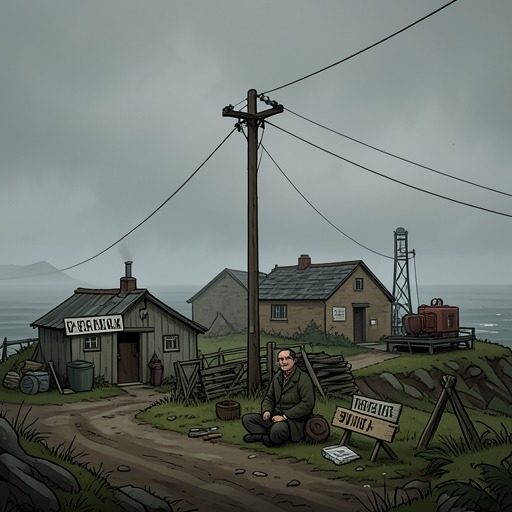
The ferry enters a rocky half-moon bay, passing a shipwreck before the cliffs slope down toward a small harbor and a town set in a green hollow. Beyond the town, sheep-speckled fields climb toward a ridge lined with clouds. The view is striking from the water, but the settlement feels less picturesque at close range: whitewashed cottages carry satellite dishes, muddy gravel streets form a small grid, and diesel generators buzz because the island is too remote and insignificant to warrant power lines from the mainland.
Abandoned, roofless cottages at the town’s edges point to a shrinking population. Children have left the island for opportunities beyond its long-standing fishing and farming traditions, while tractors provide its only vehicular traffic. The contrast between the island’s imposing landscape and its diminished settlement gives Jacob’s arrival a double character: he has reached a place that looks like the edge of a legend, but also a community shaped by isolation and decline.
The Search for the Children’s Home
Jacob and his father initially look for a place called the Priest Home, where his father has booked a room, but they cannot get clear directions from the locals. The church they find turns out to house a dingy museum rather than a bed-and-breakfast. This misdirection briefly makes Jacob fear that they have come to the wrong island or that the children’s home was another of his grandfather’s inventions.
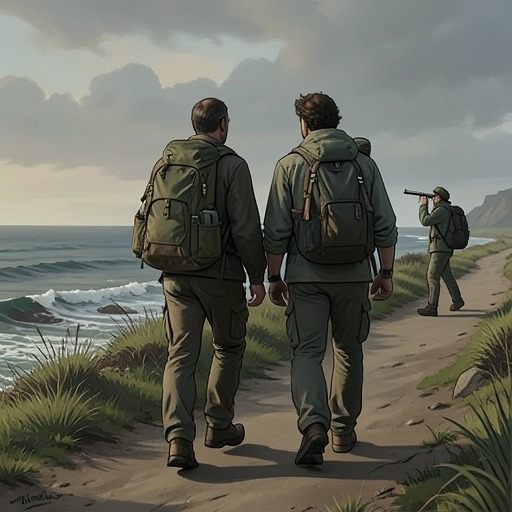
When Jacob asks about a wartime home for refugee children, a man says he does not know of refugees but recognizes the place he means. He directs them to the far side of the island, past the bog and through the woods, and warns that straying from the path could leave a traveler lost among wet grass and sheep droppings or send them over a cliff. Jacob’s father makes him promise not to go alone. The directions turn the island itself into an obstacle on the way to the home: finding it will require leaving the settled harbor behind and crossing exposed, potentially dangerous terrain.
Narrative Significance
Cairnholm Island functions as the threshold between Jacob’s ordinary life and the mystery encoded in his grandfather’s clues. The postmark gives the search a concrete destination, while the fog-shrouded arrival and difficult route preserve uncertainty about what awaits there. Its remoteness also makes the question of the children’s home feel consequential: the island is isolated enough for an old story to remain hidden, yet specific enough for Jacob to pursue it as a real place rather than dismiss it as fantasy.